
Alerts
A hand signal and a code word, for moments when speaking plainly would make things worse. They only help if the person who sees or hears them knows what they mean.
If you are in immediate danger
Call 112 in the Netherlands and most of Europe, 999 in the UK, 911 in the United States. These signals are for when you cannot make that call out loud. The numbers, and what happens when you use them, are on Get help today.
Signal for Help
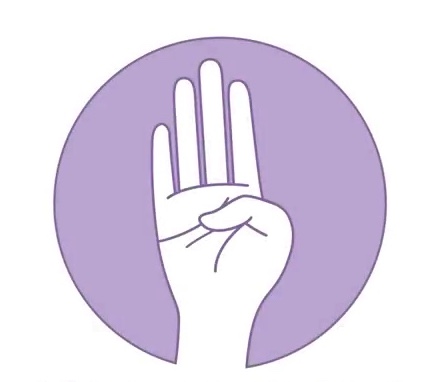
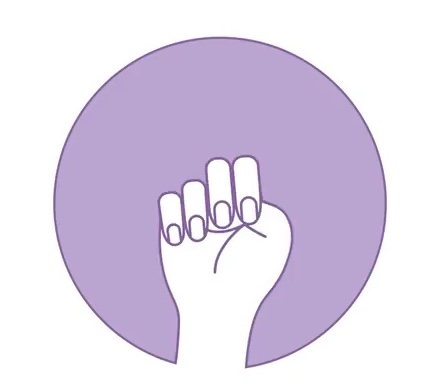
Made by the Canadian Women’s Foundation. Palm out, thumb in, fingers closed over the thumb.
- Face your palm toward the other person. One hand is enough. You can do it on a video call.
- Tuck your thumb into your palm.
- Fold your fingers down over the thumb. Hold it where they can see it, then let the hand drop.
If you see someone do this
Treat it as a request for help, not as a gesture to film. Do not draw the abuser’s attention if they are there. Ask a yes-or-no question if speaking is unsafe (“Do you want me to call someone?”). If they are in danger, call the emergency number. Do not post a video of them.
The signal only works when the person watching already knows it. Show it to one safe person before you need it. The foundation’s own page is canadianwomen.org/signal-for-help.
Ask for Angela
A code for pubs, bars and clubs whose staff have been trained. It is not a promise that every bar will know it.
- Look for a poster, or ask only if you believe the venue takes part. In the UK the scheme is run as Ask for Angela.
- Ask a member of staff if Angela is working, or ask to speak to Angela.
- They should help you leave discreetly: a taxi, a friend, security, or the police. You do not have to explain the whole story at the bar.
Netherlands
There was news coverage of Dutch bars using “Angela” in 2018. It is not a national protocol. If the staff look blank, do not keep repeating it in front of the person you are trying to leave. Ask for the toilet, a taxi, or the manager, or leave with someone else.
